Thursday, October 08, 2009

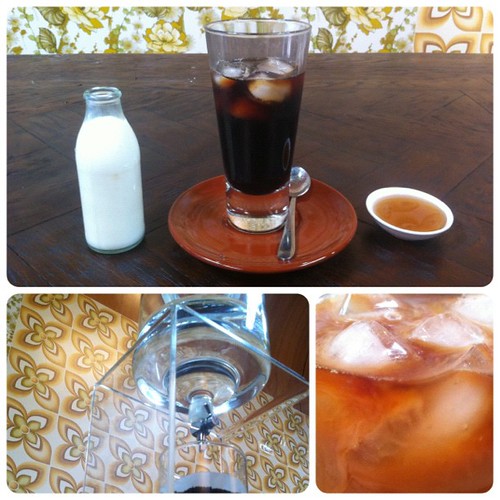
Milk in your coffee?

IMG_1202


In Markman Ellis' excellent history of the way we drink coffee, The Coffee House: A Cultural History, there is a chapter called something like The Lactification of Coffee. I forget the exact title and I haven't drunk enough espresso to get out of my chair and go and find my copy. You'll just have to trust me. Anyway, the premise is a simple one. The way coffee is drunk has changed out of all recognition from the black, hot and bitter to the smooth, milky and sweet. Starbucks is to blame, probably.

He's right of course. The average coffee shop serves variations on large milky drinks that taste vaguely of coffee. The current trend in London for flat whites et al have upped the ante a little, in that at least the coffee is well made and not drowning in milk but there's a vaguely dunderhead trendoid factor involved in getting decent coffee from the likes of Flat White and Fernandez and Wells. You tend to have to wrestle past fixed wheel bikes and iphones or baby strollers made by F1 racing teams. The other curious thing is that they've done away with froth. I remember the days, not so long ago, that the true sign of a well made cappucino was a mountain of chocolate flecked foam you could snowboard down. It would take a foot long biscotti to find the coffee, long since transformed into a molten hot nuclear plasma under the intense pressure. Now, to the new cofferati it's anathema. It's all about silky milk. A merest hint of bubble and the barista gets his head broiled under his very own steam wand. Oddly, the ancient Mayan thought the foam the best bit. They were keen on human sacrifice too. I doubt the two are connected.

We drink a great deal of coffee in the UK but we aren't coffee lovers. We are a nation of tea drinkers really. Like the Japanese. Tea requires ceremony, patience and inspires a certain rectitude. If you look at how coffee has grown up in this country it's always in contrast to tea. Coffee is always more at home alongside debate, sedition and mischief making than tea which hangs around providing succour, comfort and familiarity. True coffee loving nations are chaotic, noisy places usually with a hint of corruption crinkling the edges. We are probably well on our way but we're not quite there yet.

Thursday, September 17, 2009

Sherry/Xeres/Jerez

IMG_1213

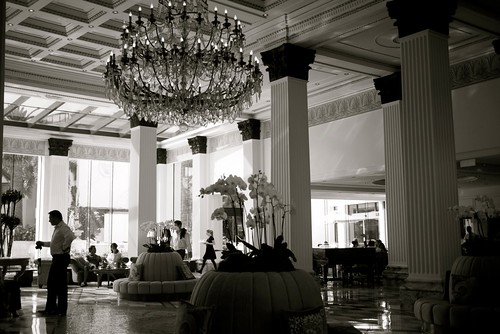
Jerez is Spain proper. It’s the Spain that big city sophisticates in Madrid and Barcelona say isn’t really Spain, it’s something that doesn’t really exist they’ll tell you, but here it is nevertheless. Jerez is sherry, flamenco and the blistering sun. It’s dusty, gypsy haunted and poor. The sherry business ain’t what it used to be, us Brits don’t drink it that much anymore, and consequently Jerez has some of the highest levels of unemployment in the country. Yet, everywhere you look is sherry. It’s in the street signage and furniture and town clocks paid for by the bodegas in happier times. Tio Pepe, Domencq and the slightly jarring British names; Sandemans, Williams and Humbert, Harveys, testament to the importance of “sack” in the British imagination in years gone by. The high walled compounds of the bodegas themselves are like white washed fortresses with impossible visiting hours. Well, nine till six during the week, anyway. Unless it's a fiesta. Which seems to be quite often. There’s a faded grandeur to the town, and the people, as well turned out as anywhere else in Spain (they are a dressy lot on the whole) have a provincial air. Noble, haughty and brassy.

Sherry is the perfect drink for the climate. It’s fair to say it’s a reflection of the place itself. A glass of chilled fino is the colour of the local chalky Albariza soil and dry as a bone, like sipping on a refrigerated glass of midday sun. Not the jolly yellow midday sun of an English summer. This is a searing white light that feels like an x-ray. At five in the afternoon, the temperature sits at an egg frying 45 degrees Celsius (Fahrenheit junkies can work this out for themselves using the gizzards of a chicken of whatever it is you guys use) and the only people on the streets are heat addled Northern Europeans grinding their way through the tourist spots like World Of War craft players hoping to level up. It’s too hot to sweat; the moisture just evaporates immediately leaving you slowly desiccating, like a leg of jamon iberico.

IMG_1249

We’d just finished lunch and poked our noses out of the air conditioning. It was a meal spiked with sherry and we were ready for bed, ready to wait out the remaining heat of the day and reclaim the streets for dinner at around midnight. Kidneys in sherry, bulls tail in sherry, a semifreddo of Pedro Ximenez with raisins, pistachios and cinnamon, glasses of ice cold fino and the pruney sweetness of a dessert PX. Every dish jagged with complex citrus and herby medicinal flavours, every dish simply bloody amazing. Oddly, a trip back to the same restaurant a couple of days later was utter crap. I guess the planets had lined up for us. Walking back through the afternoon heat little white tents were being set up in the main square ready for sherry tastings.  Another fiesta, commented a woman from Madrid, “...they never do any work down here”, she said poking her Andalucian husband in the ribs with a smirk.

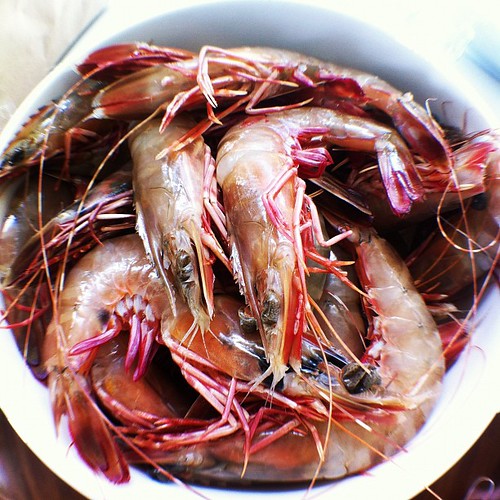
Jerez is celebrating its harvest festival at the moment. La Fiesta de la Vendimia. It runs for three weeks and it kicked off with a concert in the bullring. It seemed the whole town had turned out to see the Bulerias performed. The Buleria is one of the mainstays of flamenco. A fast paced melange of guitars, hand claps and song. A pure stripped down slice of lost loves and land, pain and solace. The voice of muezzin calling the faithful to prayer is in its DNA. They take their flamenco very seriously here, almost as seriously as their wine and it comes as no surprise that Jerez is home to the largest extant Gypsy quarter in Spain and it’s here that the Buleria was born. Where the fashion for prodigious mullets that the young chaps were sporting comes from, however, is anyone’s guess.  Luckily for us they take their food just as seriously. One stall was selling huge piles of fried baby squid, chunks of cuttlefish and whole anchovies. Another freshly made potato chips, paper cones of tiny dried shrimp and enormous sandwiches of fried pork and green padron peppers. No one is the mixed crowd of young and old, locals and tourists was going hungry.

IMG_1352

A tour round a bodega seemed churlish to refuse, especially one with it’s own collection of Old Masters. Bodegas Tradicion specialise in VOS (vinum optimum signatum or happily Very Old Sherry) and VORS (vinum optimum rare signatum or with even greater luck Very Old Rare Sherry) which are the oldest and rarest appellations allowed by the sherry police. These wines are aged in solera (the fiendishly labyrinthine system in which sherry is made) for up to 30 years and they have a bizarre complexity from the tar like sweet PX to the apothecary aromas of the Amontillados and Olorosos. Tradicion do not grow their own grapes, instead they pick and choose from the best and blend these wines, which are like Jerez itself, are complex and something of an acquired taste, but one worth pursuing.

Wednesday, September 02, 2009

A double dose of Jamie


I spent a slightly bemused hour in front of my telly last night watching Jamie Oliver's new show, Jamie's American Road Trip. Now, I'm not one to bash the guy simply because he's on TV. He's inoffensive enough most of the time, I quite enjoyed the school dinner thing and I even rate some of the cookbooks. The issue I have is that there's just too much of him, he occupies too much space. Yes, he's been piling on the pounds but this is something else. Everything Jamie Oliver does is packed to  the gills with, well, Jamie Oliver. His cookbooks are so full of pictures of him that Jamie's Italy resembles some horrid niche gay porn mag for people who like tubby cockneys and tomato sauce. The food is always second billing to Jamie's thick tongued grimace.

Take last nights programme; Jamie hangs out in the "Mexican enclave" of San Pedro in Los Angeles  He's in search of Mexican food. Given that the border isn't that far you'd figure he could catch a flight, but he's after the authentic foods of the whole of Mexico so maybe we can cut him some slack as there's less ground to cover. Maybe.

So, what does Jamie do, given he has unfettered access to the best Mexican cuisine has to offer? He hangs out with and patronises some former gangsters, who have a glassy eyed "I'm on TV, but I don't understand a word this maricon is saying" expression throughout most of the show. I felt for them, there's probably nothing in their former lives of crime; not the drugs, the violence, the deaths of family and friends that prepared them for this lisping cockney caricature intruding on their grief and their kitchens. It's like he'd seen a few Louis Theroux documentaries and decided "I'll do that and cadge a few recipes at the same time". Unfortunately, Jamie lacks Louis's empathy and curiosity and his own gargantuan self regard gets in the way. Virtually every recipe is Jamie's take on something. He's surrounded by people who know this food and culture intimately but decides, fuck it, I'll have a bash and then spout off about how he's just like them because he loves his family too.

Two comedy moments stood out. Jamie speaking Italian to a group of confused Hispanic ladies at a cactus farm because I can only guess he figures, "well, it's all the same innit!?" and the scene of him being fed mescal and getting a bit trippy. It was obviously a set up and I doubt he got more than a mild buzz but  I'd have actually loved to see him totally lose it and go on a drug fuelled cockney rampage.

As for the double dose, I ended up in Jamie's Italian in Canary Wharf on Sunday for reasons that I won't go into. It's the third time I've been to one, having visited the Bath and Brighton branches and I have to say I actually quite enjoyed those two visits. There were nice enough spaces, the food was okay and the bill a fair reflection on the whole experience. It was pleasantly,  "...meh".

However, there's something rotten in the state of Jamie. The one defining characteristic of all three restaurants, the one thing they all shared was anger. There's no way to reserve a table, so the front desk is a scrum of people trying to cajole, bully or insinuate their way in. They get angry. Really angry. Way angrier than I've seen at any other restaurant with a similar system for getting a table. The line at Wahaca is a jolly affair by comparison and people seem genuinely content to get a few mojitos down before the little buzzy thing vibrates and they can sit down. People at Jamie's Italian are pissed. In Brighton, a very large Scandanavian woman sick of standing for all of about ten minutes loudly proclaimed she would write to the man himself to complain and I think that's the crux of it. They want the man himself to show them to their table. Despite themselves, they figure Jamie owes them one for turning up. It's too personal, too much identified with him, people reckon this is a fine dining experience when it's just really a Frankie and Benny's franchise with better parmesan. Expectations are too high and so people just seem to lose it. Much how they would in Italy, I imagine, if they were ever confronted with such a restaurant. Authenticity, see?

By the way, avoid the Canary Wharf branch. It feels like a motorway service station canteen and take a deep breath before reading the menu. It makes me want to punch someone.

Monday, August 31, 2009

Forager

IMG_1167


Steely green-grey leaves of Sea Purslane, delicate cotton like Rose Bay Willow Herb flowers, fiery Arsesmart, Catsear and Mugwort daisies, Ribwort Plantain and the bright yellow flowers of Ladies Bedstraw are all in the process of being pressed and dried by a couple of kilos worth of cookbooks on my kitchen table. Evocative, mysterious and downright silly names of ingredients I can pretty much guarantee do not appear in any of recipe books applying the pressure. They are all wild growing herbs and edible plants we foraged this weekend guided by the expert hand of Miles Irving in the woods and along the coast near his home in Kent.

Miles runs Forager, a supplier of wild food to restaurants including St John Bread and Wine, Paternoster Chop House and the Rivington Grill and has recently published a book on the edible plants of the British Isles (take a look here), so it's fair to say we were in good hands picking through vast array of edible plants and berries around us. "Peckham's good for wild rocket, especially along the old canal path", he confided, "and you'll get wild garlic in Sydenham Woods", assuring us that you don't need to stray too far from Zone 1 to forage for wild food. In fact, Miles regularly does well attended foraging walks in London parks and along the Thames, educating "switched on foodies" where to find interesting wild plants and how to avoid poisoning themselves. "You can make a beeline for wild rocket when it flowers because of the distinctive yellow petals, but Greater Celandine looks very similar and it's deadly poisonous...", he pauses, " ...I'd really like to see you write that down.," he says with a rye smile.

IMG_1176

Later at Miles house, I was picking elderberries from the stalks to go with lunch, work that stained my fingers purple for the rest of the day. However, the combination of venison with the berries in a red wine reduction was stunning and worth the odd looks in the newsagents on the way home. The other revelation from Miles's kitchen was Sea Aster, a succulent shoreline wild plant that is my new favourite vegetable. It's like a cross between samphire, asparagus and spinach with a lovely silky texture.

IMG_1188

That afternoon, walking along the Kent coast we found super food Goji berries, Samphire, salty sweet Sea Purslane and wrestled with tart Sea Buckthorn berries which are notoriously hard to get off the shrubs. We picked dark green Seebeet, from which all beets have been bred, including chard and beetroots.  The challenge for Miles, it seems, is making sure that he doesn't over use each foraging spot. He visits scores of sites throughout the year and whilst some are regular as clockwork, others are fleeting and only a deep understanding of his quarry keep the whole enterprise going. That and some luck. Driving past a stream, he goes to point out one of places he gathers watercress. A bright yellow JCB is tearing the plants out, freeing the clogged stream, "That one's gone for a couple of years then", he says, with the smallest of sighs. Walking back up to the car laden with foraged goodies, Miles eyed the myriad swaying yellow heads of wild fennel flowers with a knowing eye. I guess he'll be back to this spot pretty soon.